
Men's testosterone
Testosterone Injections vs Gel: Options in Alpharetta
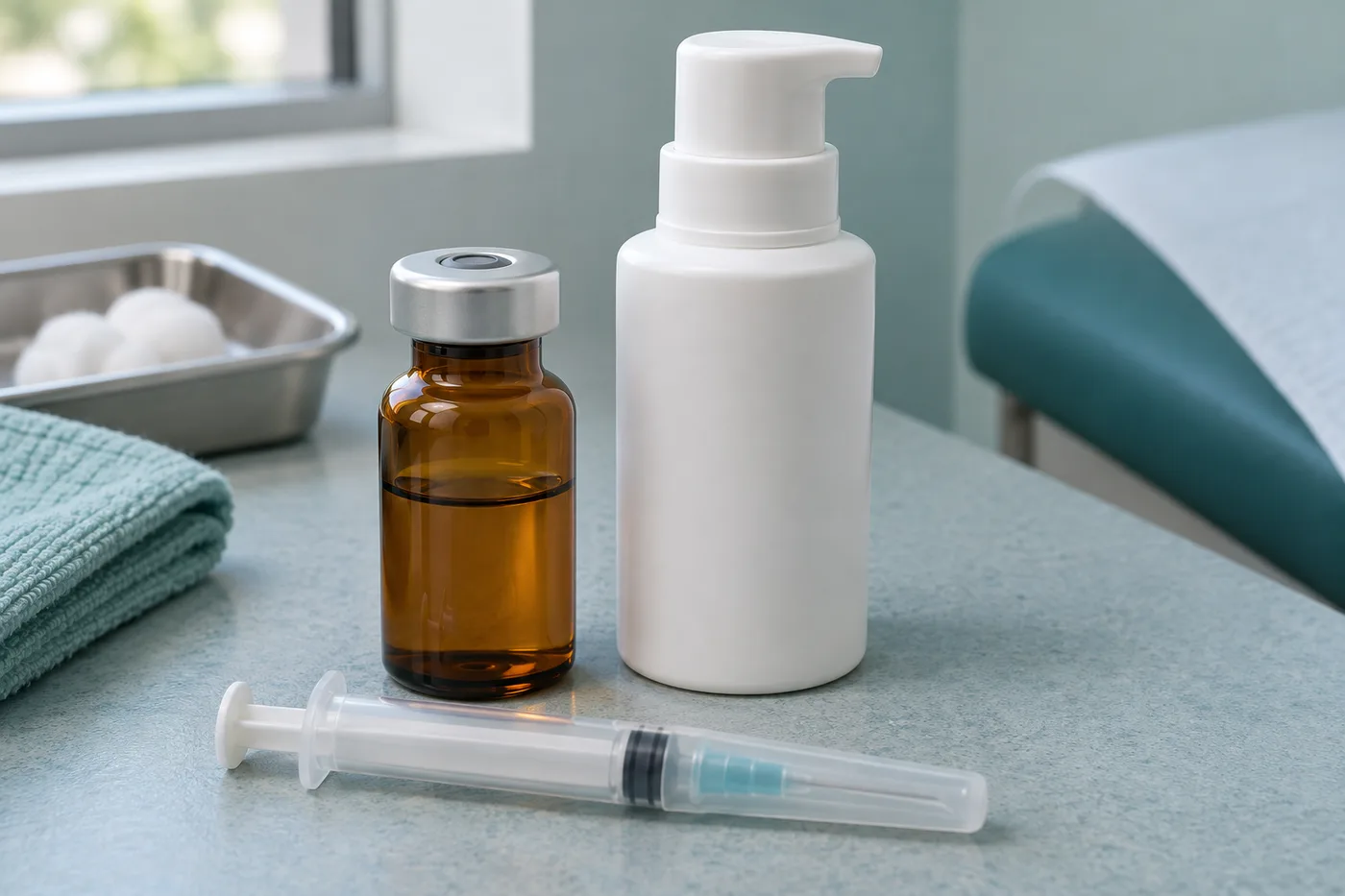
If you are comparing testosterone injections vs gel in Alpharetta, the main difference is the routine: injections deliver treatment on a prescribed schedule, while gel is applied to the skin every day. Gel generally produces steadier testosterone levels. Injections avoid a daily skin application and follow the schedule for the prescribed formulation. Both need blood tests and follow-up.
The choice starts with your health, then your preferences. A good fit means you understand how to use the treatment, can keep up with it, and have a plan for checking your response. Here is how to compare the two before your visit.
Start with these five differences
How you take it: Injections use a needle; gel goes on the skin. One involves scheduled doses. The other becomes part of your daily routine. The exact injection interval depends on the treatment prescribed.
How levels behave: Gel provides a daily supply and generally steadier levels. Injections have their own release pattern. Your blood-draw timing needs to match the formulation so the result gives a useful picture of your treatment.
What you need to remember: With injections, the dose date and next scheduled dose matter. With gel, consistent daily use matters. Think about which routine you can maintain during an ordinary week, including days when work or family plans change.
How monitoring fits: Both routes need follow-up blood work and symptom review. The delivery method changes parts of that plan, including when a testosterone sample is collected relative to a dose.
What happens if the first choice needs adjusting: We review your symptoms, results, and experience with the routine. That discussion can lead to a change in dose, timing, or treatment form. The aim is a plan that fits your medical needs and is workable for you.
How injections and gel deliver testosterone
Testosterone replacement supplies the hormone when testing and symptoms support treatment. Injections and gel are different ways to deliver it. Choosing a route is one part of care; deciding why you need treatment and what to monitor comes first.
The international expert consensus led by Janine David and colleagues describes formulation choice as a shared decision based on medical needs, preferences, and daily life. It also sets out differences in blood monitoring and treatment response. We use those practical distinctions in the comparison below.
An injection plan has several connected details: the formulation, the amount prescribed, the route, and the interval between doses. Keep those details together when discussing treatment. Knowing that someone else takes an injection tells you little about whether their schedule would suit you.
Gel adds a daily application task. The instructions for the exact product explain its use. Daily application needs to fit around bathing, dressing, and close contact. Those details vary with the product, so its written instructions are part of choosing a workable routine.
You do not need to choose before the consultation. It helps to arrive with a preference and the reason behind it. “I would rather avoid needles” or “I find daily treatment hard to remember” gives us something useful to work with.
Which routine fits your week?
For injections, picture the whole schedule. The prescription sets the formulation, dose, and interval. Those details determine the treatment schedule; an injection is not a single routine shared by everyone. The plan also needs to account for how treatment is administered.
For gel, picture a regular place in your day for the application. Think through mornings at home, overnight travel, exercise, and family responsibilities. Tell us which parts of that routine are easy and which are difficult. A treatment discussion should include those details alongside your blood results.
These questions help make the comparison concrete:
- Do you prefer a daily task or doses on a separate schedule?
- How comfortable are you with injections?
- Can you follow the application instructions every day?
- Does your work schedule change often?
- Have you used either form before, and what made it easy or difficult?
There is no need to make your week sound more predictable than it is. If you travel frequently or struggle to keep a daily habit, say so. If you like a consistent morning routine, that is useful too. We can discuss the options with your day-to-day life in mind.
Keep preference separate from response. You might find a method convenient and still need an adjustment after follow-up. Equally, a method you were unsure about may turn out to fit well once its instructions are clear.
What changes should you watch for?
Before treatment, choose the symptoms you want to discuss at follow-up. Low sexual desire, fewer morning erections, reduced energy, low mood, and changes in strength are among the concerns reviewed during a testosterone assessment. Describe your starting point in your own words.
Be specific enough that you can compare later. “My interest in sex has fallen over the past several months” is more useful than “I want to feel better.” For energy, note which parts of the day are difficult. For concentration, describe the tasks that have become harder.
Different symptoms can change at different speeds. Sexual desire may improve within weeks, while some other changes take months. Your clinician should explain when to review the symptoms being treated and which changes would lead to an earlier conversation.
A short record can make that review easier. Note how you feel, when treatment was used, and any difficulty following the routine. You do not need to turn each day into a medical chart. A few clear observations give the appointment a useful starting point.
We also consider sleep, medicines, weight, and other health concerns. Those factors belong in the conversation when symptoms continue. At follow-up, tell us both what has improved and what still needs attention.
Why blood-draw timing matters
A testosterone result during treatment needs context. The clinician interpreting it needs to know which formulation you use and when you last used it. A sample collected at one point in an injection schedule answers a different question from a sample collected shortly after applying gel.
Blood-draw timing is tied to the release pattern: an injection schedule and a daily application are measured at different points. Follow the collection timing supplied for your formulation and keep it with the appointment details. If the timing changes, tell the clinic before interpreting the result.
Follow-up also looks beyond the testosterone number. Blood-count monitoring helps us check red blood cells. Prostate-related testing and other markers are included when appropriate for your care. Symptoms, blood results, and tolerability are considered together when the plan is reviewed.
A useful follow-up conversation covers four points:
- What has changed since treatment started?
- Were the doses or applications used as prescribed?
- Was the sample collected at the planned time?
- What should stay the same or change before the next review?
You should leave knowing what happens next. That may mean continuing the current plan or changing part of it, with a clear follow-up point. Keep treatment instructions and collection instructions together; a change in one can affect how the next result is interpreted.
Understand the risks before choosing
Both forms can reduce sperm production and affect fertility. Tell us before starting if you want children or want to preserve that option. Fertility goals can change the treatment discussion and lead to specialist assessment.
Testosterone can also raise the proportion of red blood cells in your blood, called hematocrit. This effect is more common with some injections than with topical treatment. Blood-count monitoring helps identify it so your clinician can adjust the plan when needed.
Gel can transfer through skin contact to another person, including a partner or child. Follow the product-specific contact precautions before another person touches the application area. The choice of route should account for your household as well as your preference.
Medical history and baseline results matter before either option begins. We discuss prostate-related concerns and other health conditions as part of that review. Report new symptoms and problems using the treatment so they can be assessed promptly.
How we approach the choice at NewYouMD
Our testosterone replacement program brings symptoms, lab work, medical history, and treatment planning together. We review the concerns that brought you in, then discuss an individualized route, dose, schedule, and follow-up plan when treatment is appropriate.
The assessment can include testosterone and related hormone markers, blood counts, and prostate-related monitoring. The exact tests depend on the clinical review. We also discuss medicines, sleep, training, weight history, and fertility goals because these help shape the plan.
Our physician-supervised care continues after the first treatment decision. Follow-up combines how you feel with what the blood work shows. If a route is difficult to maintain, tell us. Practical problems are part of the review, alongside medical response.
A review after a treatment change has a specific purpose: connect the new routine with your symptoms and blood results. A convenient schedule and an appropriate hormone result are different parts of the same assessment. Both matter when deciding what continues.
You can compare injections and topical options without choosing in advance. We explain how daily application, scheduled doses, and follow-up fit your assessment. Your preference helps shape the plan once the clinical findings have been reviewed.
Before your visit
Have your current medicine list, earlier hormone results, and details of any prior testosterone treatment available. Include the treatment form and schedule if you have used it before. Write down your main symptoms and any preference for injections or gel.
If blood work is being arranged, confirm the collection instructions in advance. Our consultation is complimentary and no-obligation, so you can begin with questions and a discussion of the next step.
Your appointment in Alpharetta
We provide men's hormone assessment and ongoing care at 3235 North Point Parkway, Suite 104, Alpharetta. Use the call or online-booking option below to arrange your visit.
Frequently asked questions
Does gel give steadier levels than injections?
Daily topical treatment generally provides steadier testosterone levels. Injectable formulations have different release patterns and schedules. The clinician uses your symptoms and correctly timed blood work to assess how the chosen form is working for you.
Do injections and gel need the same blood tests?
Both involve testosterone testing and safety monitoring, including blood-count review. The exact tests depend on your assessment. Collection timing differs by formulation: the result is interpreted relative to the last dose or application, not simply the time on the clock.
Can I change from one form to the other?
Discuss a switch during a treatment review. The new form needs its own instructions, dosing plan, and monitoring arrangements. Explain why you want to change so the discussion addresses the part of your current routine that is not working well.
Will I feel different immediately?
Treatment response is assessed over time. Some sexual symptoms may improve within weeks; other changes can take longer. Agree on the symptoms being followed and a review point with your clinician, then describe the changes you notice.
What if I have tried testosterone before?
Share the previous formulation, schedule, blood results, and your experience. Include what improved and what prompted you to stop or seek a change. That history helps make the new assessment more useful.
Do I need to decide on a treatment before booking?
No. You can come with questions about the two routines. We begin with your symptoms and health history, review the testing needed, and discuss a treatment plan when the assessment supports it.