
Medical weight loss
What to Expect From a Weight Loss Clinic Near Alpharetta
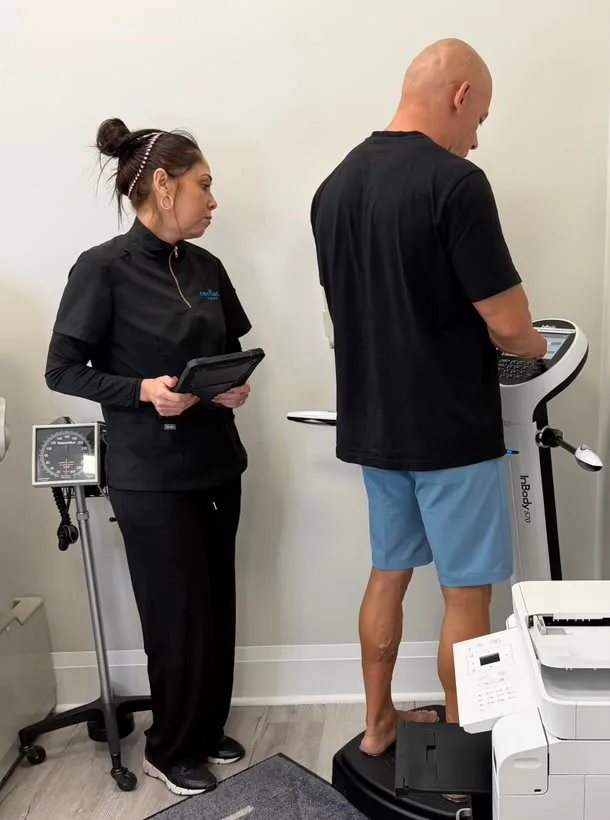
A weight loss clinic near Alpharetta should offer more than a prescription. Your care should begin with a health assessment, explain which options fit, and include follow-up as your weight and appetite change. At NewYouMD & Aesthetics, we combine physician-supervised medication planning with nutrition guidance, lab review, and attention to muscle and hair health.
You do not need to arrive knowing which medicine you want. A useful starting point is what has been difficult: hunger, keeping weight off, maintaining strength, or managing a health concern alongside weight. Those details help us build a plan around your needs and make the first appointment more productive.
Start with a medical assessment
The first question is whether medical weight treatment fits your health. The National Institute of Diabetes and Digestive and Kidney Diseases explains that adults may be considered for weight-management medication at a body mass index of 30 or higher, or 27 or higher with a weight-related condition such as high blood pressure or type 2 diabetes.
Body mass index, or BMI, compares weight with height. It helps frame the assessment, but it does not replace your medical history. Current treatment, family history, previous weight-loss efforts, and health goals all matter when choosing a plan.
We also review relevant labs. Depending on the assessment, these may include glucose, thyroid function, lipids, or other metabolic markers. Testing has a purpose: to understand the clinical picture and help guide care. The selection comes from your history and findings.
Your earlier efforts count as useful information. An eating plan that helped for six months, a medicine that changed your appetite, or difficulty maintaining weight after treatment gives us a starting point. You do not need a perfect record of every diet to begin.
Understand the role of medication
Weight-management medicines can help reduce hunger or make you feel full sooner. That can make changes to food intake easier to sustain. Medication works best alongside eating and activity habits, so those parts of care begin together.
Our program considers semaglutide and tirzepatide when appropriate. Semaglutide acts on the GLP-1 pathway, which helps regulate appetite and food intake. Tirzepatide acts on both GIP and GLP-1 pathways. The injectable weight-management forms are used weekly, with medicine-specific instructions.
Selection depends on your health, previous response, and current treatment. The recommendation should connect the medicine to your goals and explain the monitoring that comes with it. Dosing is personalized and reviewed over time.
A prescription is not the entire plan. You also need a manageable eating routine, a way to report how treatment feels, and a clear understanding of follow-up. Those pieces help turn the initial decision into ongoing care that fits your life.
Know what useful follow-up looks like
Follow-up is where your experience and the clinical findings come together. We review appetite, treatment use, weight trends, nutrition, hydration, and relevant results. Those details guide whether to continue the plan or adjust part of it.
For example, a change in appetite is important information, but it is only part of the review. How much you are eating, whether you are maintaining energy, and how your routine is working also matter. A lower scale reading does not answer each of those questions.
Keep the medicine name and current instructions available at visits. If treatment has changed, include when it changed. This makes it easier to interpret the response and avoids confusion between different products or schedules.
A good review ends with a clear next step. That might be continuing the current plan, adjusting treatment, or putting more attention into nutrition and body-composition support. You should understand what is being followed and how your next check will build on it.
Make food planning practical
Our nutrition guidance includes protein, hydration, and eating habits that work alongside treatment. When appetite changes, the plan still needs to account for adequate nourishment. We connect those priorities with your usual routine instead of treating food as an afterthought.
Think about the meals that are easiest to maintain and the times when eating becomes difficult. A workday with few breaks may need a different practical approach from a day at home. Describing that pattern helps make the conversation specific.
There is no need to arrive with a polished meal diary. A simple outline of what you usually eat and drink gives us something to work from. Include recent changes that followed a new medicine or a change in appetite.
Nutrition guidance should also connect with your goals beyond weight. Energy, muscle preservation, and hair health are part of our program's broader review. These are reasons to pay attention to what you are eating as treatment progresses.
Keep strength in the plan
Our weight-management approach includes resistance-training guidance and body-composition support. The aim is to pay attention to muscle as weight changes. Strength-related goals belong in the same conversation as the number you hope to see on the scale.
Body composition describes more than total weight. It can help frame discussions about fat and lean mass, while the broader assessment considers nutrition, activity, and clinical findings. At NewYouMD, we use this perspective to keep the program focused on overall health.
Activity planning should start from your current routine. Include what you already enjoy and any limitations that affect movement. This helps us connect the program's resistance-training guidance with a starting point that makes sense for you.
The treatment review can then consider both weight trends and how you are managing the plan. A useful goal may include maintaining a regular strength routine or improving consistency with protein intake. These practical aims make progress easier to discuss at follow-up.
Set expectations for progress and maintenance
Weight response varies by person and medication. Health benefits can begin before someone reaches a final target weight. A loss of 5% to 10% of starting weight can improve measures such as blood sugar, blood pressure, and triglycerides.
For perspective, 5% of a starting weight of 200 pounds is 10 pounds. That is an example of the calculation, not a personal treatment target. The health meaning of a change depends on your own starting point and clinical findings.
Obesity is a chronic condition, so medication may be used long term when it continues to help and remains appropriate. Maintenance should be part of the discussion from the beginning. Reaching a goal leads to a new stage of planning rather than automatically ending care.
Weight regain is common after stopping weight-management medication. Continuing healthy eating and activity habits can help limit regain. If you are thinking about stopping, the next stage deserves a deliberate review of appetite, routine, and the health goals that brought you into treatment.
Review risks before starting
Medication choice includes a review of possible side effects and important medical history. Nausea, constipation, changes in appetite, hydration difficulties, and fatigue can affect treatment tolerance. Persistent or concerning symptoms need prompt attention from the care team.
Semaglutide and tirzepatide are unsuitable for people with a personal or family history of medullary thyroid cancer or multiple endocrine neoplasia syndrome type 2. Allergies, digestive concerns, and other medical conditions also belong in the assessment.
Weight-management medicines should not be taken during pregnancy or when planning pregnancy, and they are not recommended during breastfeeding. Share all medicines, supplements, and weight-loss products you use. Combining treatments requires a prescribed plan.
Follow your own medication instructions. A dose from a previous prescription or someone else's schedule is not a guide for your treatment. Changes should be made through your care plan, with the response reviewed afterward.
How we bring the pieces together
Our GLP-1 medical weight-loss program combines consultation, lab review, personalized medication planning, and ongoing monitoring. Nutrition, hydration, protein intake, and resistance training are part of that care.
We also screen for hair concerns. Rapid weight change or calorie restriction can be followed by temporary shedding, sometimes a few months into treatment. Our hair-support pathway can review nutrition, thyroid, hormones, and scalp health when appropriate.
If shedding develops, it deserves its own assessment instead of being ignored while the scale changes. Relevant testing may include iron stores, B12, vitamin D, zinc, and thyroid function, selected for the individual situation. The goal is to identify what needs attention and connect you with the right next step.
This coordinated approach keeps follow-up useful. The medicine, eating routine, body-composition goals, and related concerns can be considered together. We want you to understand the plan and feel comfortable describing how it is working day to day.
Before your first visit
Have your medicine and supplement list, relevant lab reports, and details of earlier weight-loss treatment ready. Include one or two goals beyond a target weight. Our consultation is complimentary and no-obligation, so you can start with an assessment before choosing treatment.
Plan your Alpharetta appointment
We provide medical weight-loss assessment and follow-up in Alpharetta at 3235 North Point Parkway, Suite 104. Call or book online below to take the first step toward a plan that fits your health and routine.
Frequently asked questions
Do I need to choose a medicine before my visit?
No. The assessment comes first. Your health history, current treatment, previous response, and goals help guide whether medication is appropriate and which option fits.
Does the program include food and activity guidance?
Yes. Our approach includes nutrition, protein planning, hydration, resistance-training guidance, and body-composition support. These work alongside the medical plan throughout treatment.
Is the scale the only way progress is reviewed?
No. Weight trends are considered with appetite, treatment use, nutrition, energy, and relevant clinical findings. Muscle and hair-health concerns can also shape the next step.
Can I come in after trying treatment somewhere else?
Yes. Include the medicine name, dose, dates of use, and why treatment stopped or changed. Previous experience helps us understand what worked and what needs a different approach.
How long does medical weight management last?
Duration depends on your response and ongoing assessment. Some people continue medication long term while it remains helpful and appropriate. Eating, activity, and maintenance planning remain important through each stage.